
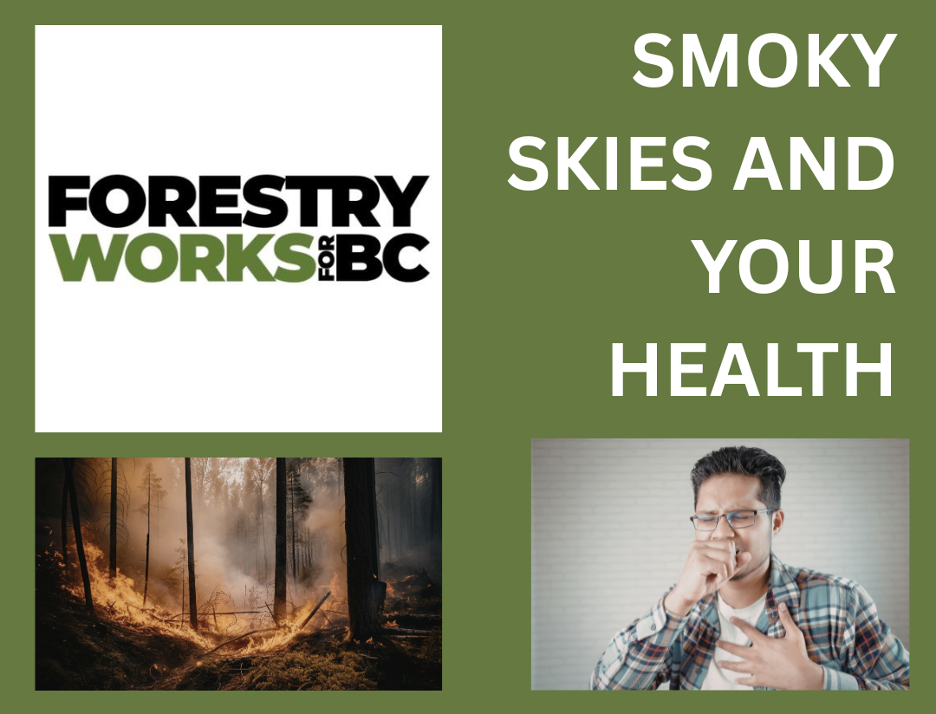
Wildfire smoke isn’t just unpleasant, it’s a serious form of air pollution that can affect everyone, even at low levels.
This smoke is a complex mixture of harmful substances, including:
- Ozone
- Methane
- Sulphur dioxide
- Nitrogen dioxide
- Carbon monoxide
- Volatile organic compounds
- Fine particulate matter (PM2.5)
- Polycyclic aromatic hydrocarbons (PAHs)
Some of these pollutants have no known safe level of exposure. That means even small amounts of smoke can impact your health.
As smoke levels rise, so do the risks—especially for children, older adults, and those with existing health conditions.
It’s also important to note: poor air quality isn’t always visible. Even when you can’t see or smell smoke, the air may still be unsafe to breathe.
During active wildfire seasons, smoke can become the largest source of air pollution in the province. Emissions from forest fires can travel long distances, affecting communities far from the original fire.
Dr. Paul Hessburg provides a detailed explanation why wildfire is important to forests, animals and ecosystem health in many areas. He also describes how since the 1890’s humans have changed our forests in ways that have increased mega-fires today. Many of the over-crowded forests today were created by humans excluding forest fires over many decades.
The scale of impact is significant. In British Columbia, annual greenhouse gas emissions were reported at 62 million tonnes of carbon dioxide equivalent. By comparison, extreme wildfires across Canada in 2023 released an estimated 640 million metric tonnes of carbon—highlighting the growing intensity of these events.
Reducing the size and severity of future wildfires will require proactive forest management. This includes restoring a more balanced landscape through strategic thinning and the reintroduction of diverse forest and grassland ecosystems.