
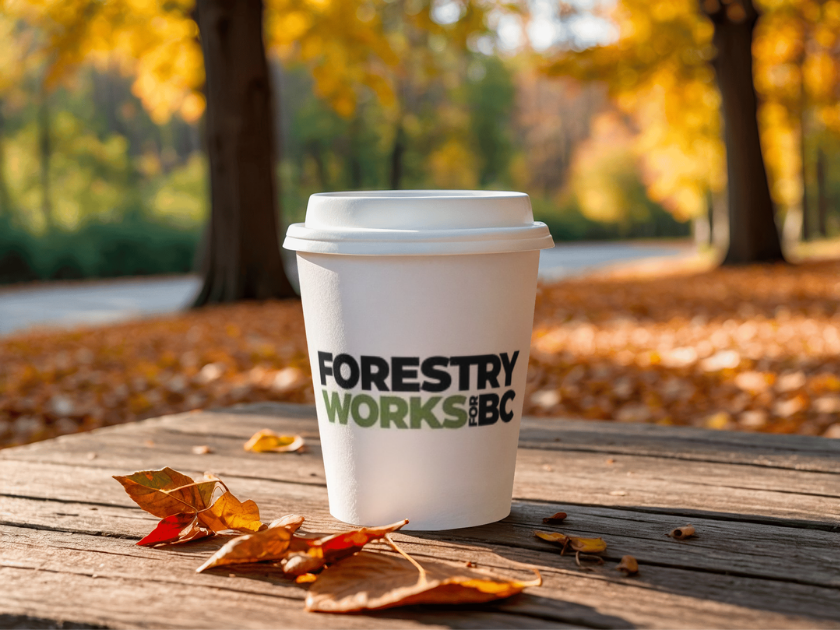
Probably not the first thing people think about while grabbing a coffee, but many of the paper cups used in everyday life begin with a familiar B.C. resource: waste wood from the forest.
When people are on the go, convenience matters. That is a big reason disposable paper cups have become such a daily staple. They are lightweight, hygienic, and versatile, making them a practical choice for both hot and cold beverages. Their single-use design also helps reduce the risk of contamination, which is why they are commonly used in cafés, offices, hospitals, and at public events.
As more people and businesses look for lower-impact alternatives to plastic, paper cups have become an increasingly popular option. Some compostable and biodegradable cups use plant-based coatings instead of plastic, allowing them to break down in industrial composting facilities and offering a more environmentally conscious choice than traditional plastic-lined cups.
The main material in disposable paper cups is paperboard, which is made from wood pulp. That pulp is processed into sturdy sheets that can hold liquids while still being lightweight and easy to use. Where that pulp comes from matters. Many manufacturers now prioritize wood sourced from sustainably managed forests, helping protect ecosystems and support forest regeneration. Recycled paper fibres can also be used, which helps conserve resources and reduce waste.
So, the next time you pick up a paper cup, it is worth remembering something small and everyday can have its roots in responsible forestry, innovation, and a growing push toward more sustainable materials.
What are disposable paper cups – Everything you need to know!